HomeportadaWaterthree layersSilent Deliveryurban logisticsHogar Vivoliving homesInitiativethe motherEnquirewrite to us

Clean Soul System

Systems that care for water, people and cities

EcoHuman Initiative brings together a family of systems designed to care for the essential resources of the city. Each one is developed with measurable rigour, offered on a not-for-profit basis and open to collaboration with governments and communities.

Not-for-profit organisation
WaterDeliveryRecyclingHomesConnectionDubai 2040UAE Net Zero 2050

One mother, a family of systems

Each system cares for a different resource of the city, yet all of them share a single philosophy: help, measure, sustain.

If you help care, you deliver dignity to those who really need it

EcoHuman Initiative · Not-for-profit
EcoHuman Connect

EcoHuman Connect

The layer that connects the framework

+
Eco city connected — aerial view of a sustainable districtEcoHuman Connect adds a layer of digital traceability to waste classification and management, with real-time dashboards that give every stakeholder a shared and measurable view of results. It is accompanied by a Community Environmental Ambassadors Programme, which invites residents to volunteer, learn and take an active role in their environment. All of this operates without interfering with existing infrastructure or contracts.
EcoHuman Initiative

EcoHuman Clean Soul

The human dimension of the framework

+
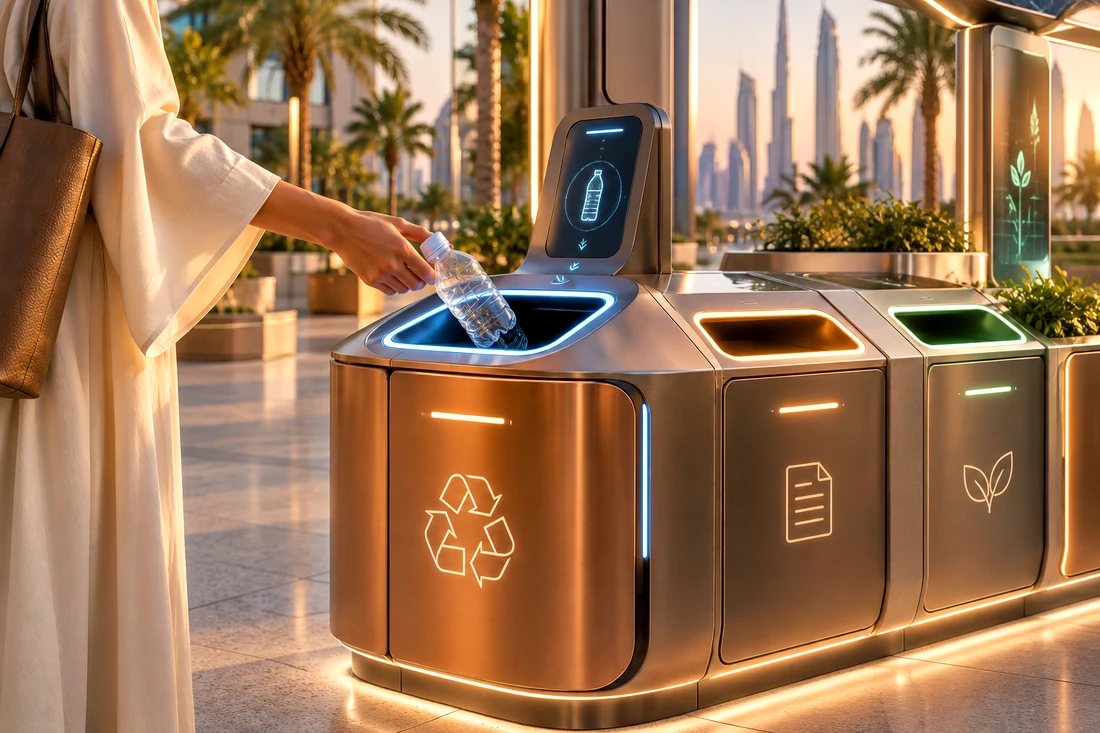
EcoHuman Initiative — the Clean Soul System, a city that closes its cyclesClean Soul recognises every person who contributes to the cycle. Through intelligent recycling modules, each contribution becomes a benefit: personal support, training and access to culture, nutritious food, transport and local enterprises. It is the part of the framework that looks after people, not only resources.

Who we are

A self-taught architect of systems

EcoHuman Initiative was founded by Alejandra Muñoz, an urban problem investigator and systemic solutions architect. Neither architect nor engineer by title, she has built her knowledge through self-directed, empirical and collaborative work, learning from technicians, users and institutions alike. Her focus is on replicable systems rather than singular creations.

Our vision is a city that works like a living organism, where water, movement, homes and waste are able to close their cycles, and where progress is measured as balance, coherence and responsibility.

Vision · EcoHuman Initiative

Our path

Three years of observation and building

2024

Observation

A period of independent study in behavioural economics, water management and urban design, focused on the friction between design and human behaviour.

2025

First proposals

A first proposal to Dubai Municipality Platform 04, not selected but with recognition of authorship. EcoHuman Water is admitted for assessment at the 5th Cycle Award.

2026

The family reorganises

EcoHuman Connect gives structure to the framework, Silent Delivery is completed as a public model with a defined pilot, and Hogar Vivo extends the approach into the home.

How we find each solution

Five steps, from friction to system

01

Observation

Understanding where design and human behaviour come into friction.

02

Diagnosis

Determining whether the issue is technical, structural or perceptual.

03

System architecture

A flexible architecture, adapted to each context rather than imposed as a uniform solution.

04

Ethical endorsement

Each system is reviewed against three questions: does it uphold dignity, does it avoid dependency, and can it be reproduced?

05

Validation

Every system is proven in pilots before it grows, and never promises what it cannot guarantee.

Cities already have what they need. What is often missing is the structure that allows resources to complete their cycle. Help, measure, sustain.

Why circular · EcoHuman Initiative

Why the Emirates

The Emirates combine high operational standards, remarkable cultural diversity and a national vision with clear milestones: Dubai 2040, the UAE zero-emission pathway and RTA's 2030 sustainable transport target. It is an environment where a system can be validated with rigour and then shared with the world.
Questions & answers

What partners ask us

Are the systems for sale?+
No. EcoHuman Initiative is a not-for-profit organisation, and its systems are offered as public solutions to real problems rather than as products. Adoption involves close collaboration with the author throughout design, implementation and validation.
Does the system require changing our existing infrastructure?+
No. The systems work at the point of use, at the tap, the access point or the street, and integrate with the wells, reservoirs and urban networks already in place. The intelligence sits before the outlet, so the tap and the familiar experience remain unchanged.
Does monitoring collect personal data?+
Never. Sensors serve only the operation of the system, detecting leaks, abnormal usage or maintenance needs. No personal data is collected and no individual is monitored: ethics by design.
How are results verified?+
Through pilots carried out before any scaling, measuring secure access, mitigation of health risks, efficiency and community acceptance. The system never promises what it cannot guarantee.
Can each layer work on its own?+
Yes. Each layer can operate independently, and together they reinforce one another by caring for the same resource at different points of its cycle.
Who can adopt a system?+
Municipalities, institutions and communities. We welcome conversations with any public body interested in collaborating: write to ecohumaninitiative@proton.me.

Contact

Let's build it together

We welcome conversations with municipalities and institutions interested in collaborating.

ecohumaninitiative@proton.me
EcoHuman Water — the three-layer system in the city
EcoHuman Water

EcoHuman Water

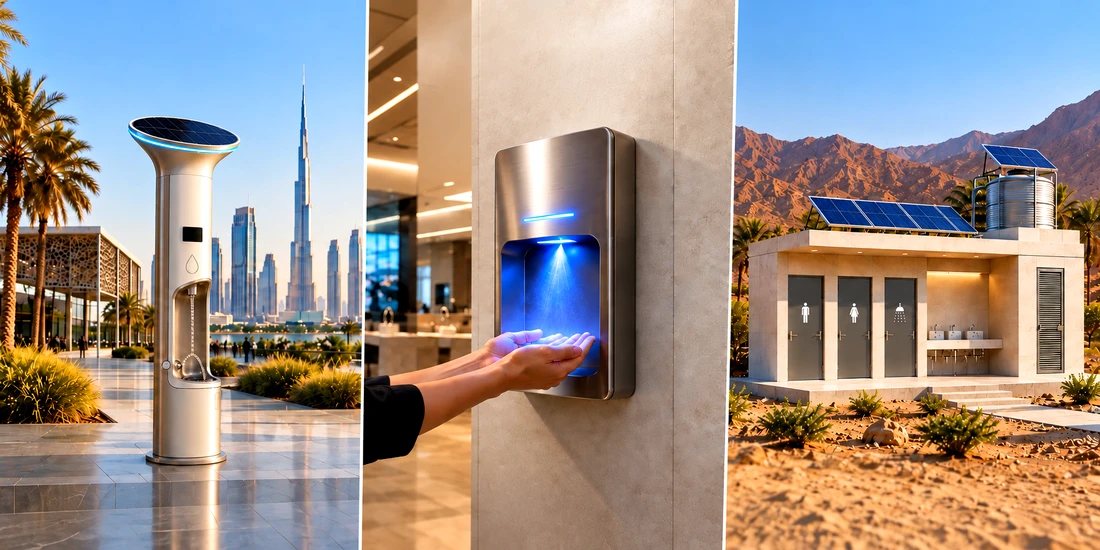
An integrated three-layer system: responsive control of urban water, touchless everyday hygiene, and safe water and sanitation where water cannot be taken for granted.

Scarcity is not only absence

In many places water is present, yet access to it remains inconsistent, unsafe or structurally fragile. The challenge lies not only in availability, but in how the resource is protected, managed and used where people need it.

The system

Three layers, one cycle

01

Urban Programme

A discreet layer of intelligence built into the urban water network.

Each outlet becomes responsive to real demand, regulating flow only when water is needed and helping prevent unnecessary consumption. The system works quietly in the background, preserving the familiar experience of the tap while making the network more efficient, resilient and accountable.

02

Hygiene Flow

A touchless approach to everyday hygiene.

Hygiene Flow replaces conventional handwashing with a controlled disinfecting mist, reducing the need for running water during routine hygiene moments. Designed to operate independently or alongside the urban water network, it introduces a simple principle: hygiene should remain accessible while water is treated as a resource, not a disposable flow.

03

Scarcity Contexts

A response designed for places where water cannot be taken for granted.

The system works with the resources already available, combining appropriate treatment, safe sanitation and responsible water recovery according to local conditions. Instead of imposing one solution everywhere, each intervention is adapted to its environment, built for practical maintenance and designed to strengthen long-term water resilience.

What the city saves funds where water is scarce.

Quiet design, woven into daily life

Using water well should not depend on asking people to change their habits. Flow control, access protection and user safety are built into the design itself.

01

Operational sensors only

Sensors attend only to the operation of the system, detecting leaks, abnormal consumption and maintenance needs, without collecting personal data.

02

Simplicity & resilience

Designed for resilience and everyday reliability, with light maintenance that requires no specialised tools.

Scarcity Contexts in practice

From secured access to safe return to soil

01

Secured access points

Reliable access to water where supply is irregular or unsafe.

02

Treatment by risk

Treatment matched to the real risk of each source and to the way its water is used.

03

Hygiene modules

Robust, accessible facilities built for intensive daily use, helping to prevent waterborne disease.

04

Return to soil

Treated water returns safely to the land, completing the cycle while preserving local moisture and fertility.

EcoHuman Water never offers water it cannot guarantee. Each intervention is validated through pilots before scaling, measuring secure access, health outcomes, efficiency and community acceptance.

Metrics & Verification · EcoHuman Water

EcoHuman Water works where scarcity and human access meet, upholding dignity, avoiding dependency and encouraging shared responsibility.

Conceptual framework

Bring Water to your city

We welcome conversations with municipalities and institutions interested in collaborating.

ecohumaninitiative@proton.me
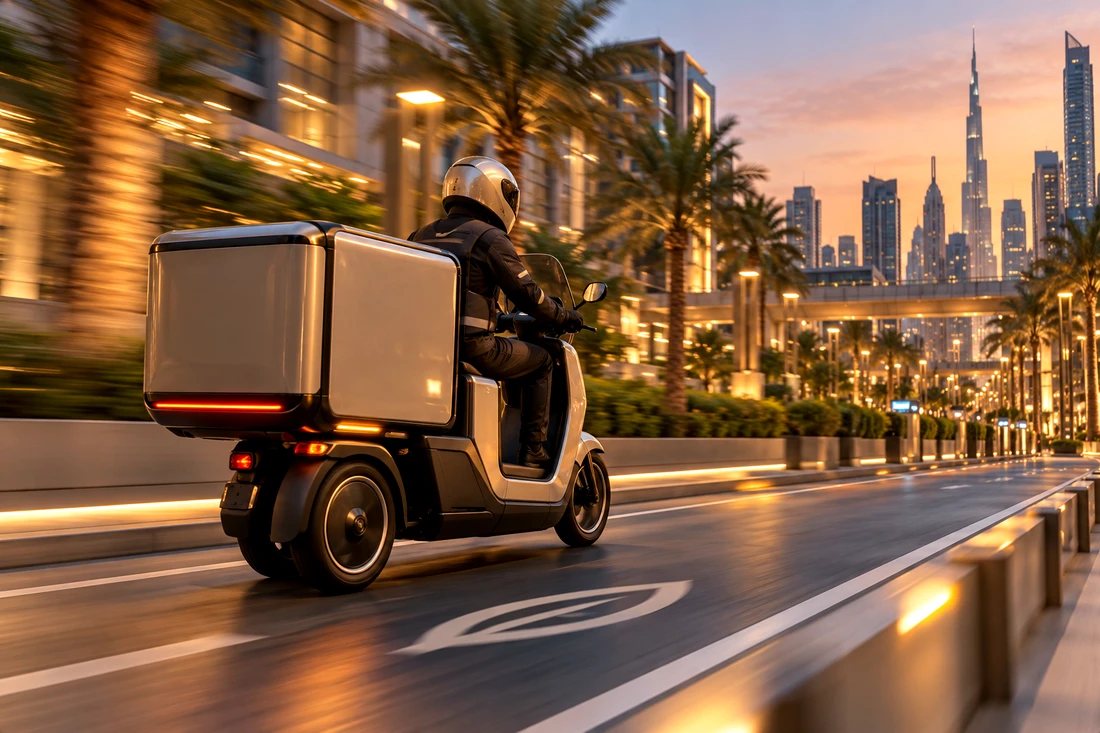
EcoHuman Silent Delivery: electric delivery at dusk
EcoHuman Silent Delivery

EcoHuman Silent Delivery

A coordinated delivery model for the whole city: one public platform, operated by the entity that adopts it, connecting every business with an electric fleet and planned, reliable delivery times.

The model

One platform for all of the city’s deliveries

Every order from every connected business enters one common platform, operated by the public entity that adopts it. The platform coordinates delivery; it does not replace the businesses that sell or the operations that already work.

Each business keeps its products, packaging and brand. What changes is how the order reaches the customer: organised, planned and fair for every business, large or small.

Silent Delivery in one minute59 seconds

Dubai context

A direction already in motion

Delivery has become a permanent part of daily life in Dubai, and the emirate has accompanied its growth with clear, structural measures. Silent Delivery is designed to continue that direction, building on the controls already in place.

65,000delivery motorcycles in the emirate, an approximate figure reported by the RTA
40air-conditioned rest areas for delivery riders across Dubai
42.5%sustainable transport target for 2030 in the RTA Strategic Plan

Sources: RTA (2025 and 2026); RTA Strategic Plan 2024–2030.

How it works

From the shop to the door

  1. The business

    Places the order on the platform and keeps its products, packaging and brand.

  2. The platform

    Groups orders by area, shares routes across operators and sets a realistic delivery window.

  3. The fleet

    Electric motorcycles for local routes, kept off high-speed roads; enclosed electric vans for longer ones.

  4. The door

    One rider, one number, from pickup to delivery, with a planned and traceable time.

Riders work with clear guidelines on routes, times and limits, with rest built into the working day, so that safety never depends on taking risks. Night and off-peak slots keep the service continuous, 24 hours a day.

Guiding principles

Coordination over competition. Planning over urgency. Fair access for every business. Silence, safety and dignity in every delivery.

Proposed pilot

Al Barsha 2, the full system in one district

The pilot tests Silent Delivery as it is designed, not a reduced version. Al Barsha 2 is the area where Dubai is already piloting the 20-Minute City model, and the Al Barsha area already has rest areas for delivery riders.

  1. PreparationPlatform set-up, fleet deployment and the adhesion of licensed companies, with a baseline measured in the area.
  2. Operation · 12 monthsA full annual cycle, including Dubai’s summer, with periodic reviews.
  3. EvaluationResults compared with the baseline and, if the objectives are met, gradual extension to other districts.

A complete model, offered to the city

Silent Delivery has been developed in full: an institutional proposal, a technical annex, the platform architecture and a prototype of the application. EcoHuman Initiative offers it on a not-for-profit basis to the public entity designated to adopt and operate it, and shares the complete dossier with institutions on request.

ecohumaninitiative@proton.me
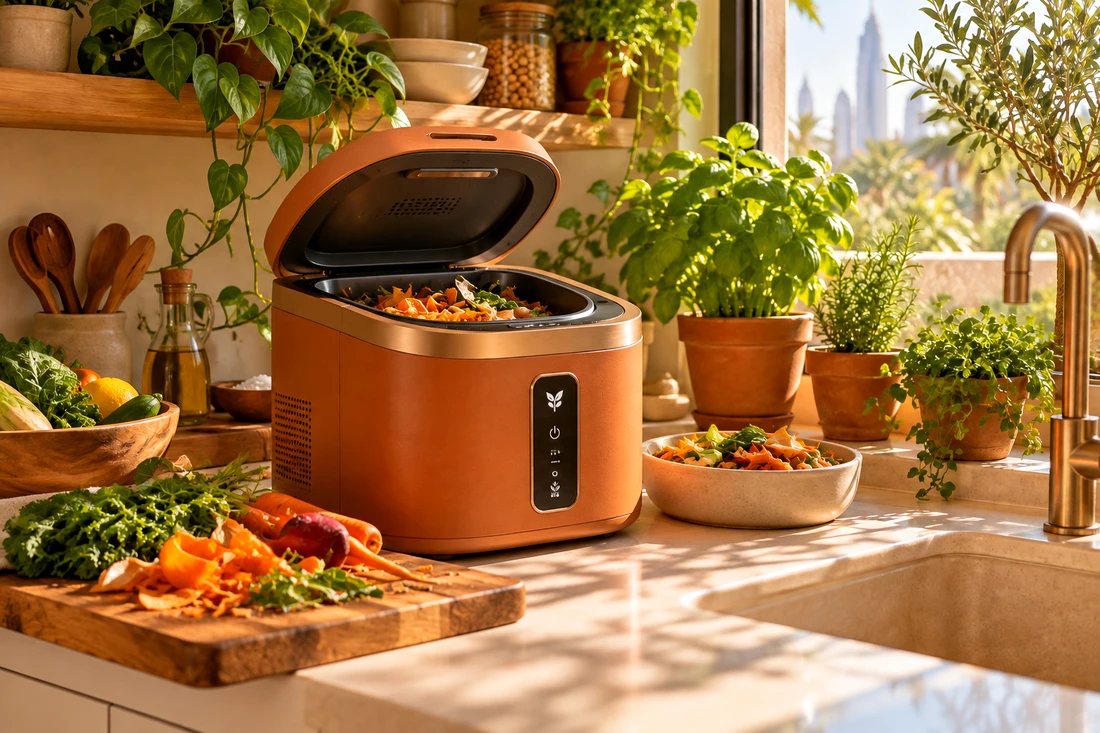
EcoHuman Hogar Vivo — the living home composter
EcoHuman Hogar Vivo

EcoHuman Hogar Vivo

Living homes, where households turn organic waste into compost for their plants and are rewarded with new plants for their home. Circular care, family by family.

Homes that learn to live in harmony

Hogar Vivo extends sustainability and wellbeing into the home, accompanying families as they turn everyday spaces into places of ecological harmony.

Principles

Seven principles under one roof

Environmental awareness

Understanding the impact of daily actions on the environment.

Energy efficiency

Responsible energy use and adoption of efficient technologies.

Water management

Saving and reusing practices in every household.

Waste reduction

Minimising, reusing and recycling, so that waste becomes a resource.

Responsible consumption

Sustainable products and a lighter footprint of consumption.

Human wellbeing

Homes that foster physical, mental and emotional health.

Community

Sharing knowledge and experiences among neighbours.

And always

Circular care, with households that close their own cycle.

The programme

01

Educational workshops

Practical sessions on energy, water, recycling and responsible consumption.

02

Personalised advisory

Home visits to assess each household's needs with tailored recommendations.

03

Guides & resources

Materials and practical tools to implement sustainable change at home.

04

Digital platform

An online space to share information, ideas and experiences between homes.

Hogar Vivo is introduced progressively: open voluntary participation, an institutional pilot and then expansion for those who choose to join. It is designed to be replicated nationally and internationally.

Strategic annex

Bring Hogar Vivo to your community

ecohumaninitiative@proton.me
EcoHuman Initiative — intelligent recycling modules
EcoHuman Initiative

EcoHuman Initiative

The organisation that brings together a family of systems, built around an intelligent recycling ecosystem where every contribution returns a benefit to the person who makes it. Developed with measurable rigour, offered on a not-for-profit basis and open to collaboration with governments and communities.

Not correction. Not imposition. Support.

A holistic urban framework that accompanies the natural progression of the city, fundamentally human and centred on dignity.

The architecture

01

EcoHuman Connect

The connective layer of the framework: digital traceability, real-time dashboards and a Community Environmental Ambassadors Programme that invites residents to take part.

02

Citizen application

A citizen application built on transparency, traceability and participation, where residents can follow the system and see its results.

03

Clean Soul System

The human dimension of the framework: wellbeing, training and culture for everyone who contributes.

04

The family of systems

Water, Silent Delivery and Hogar Vivo, each caring for a different resource of the city.

Modular, adaptable and aligned with Dubai 2040, designed to support the future while caring for the people who make it possible.

Long-term vision

The person behind the systems

Urban problem investigator and systemic solutions architect. Her work begins where others accept that "that's just the way things are": she identifies small structural inefficiencies that lead to large consequences. Grounded in the observation of human behaviour in real environments, she builds replicable systems whose aim is to validate principles rather than impose technologies.

Alejandra Muñoz · Founder & System Designer

Let's build it together

ecohumaninitiative@proton.me